Family Protection Fund
Fund Impact
When a family needs protection, the community responds.
In our growing immigrant population, fear of deportation and family separation has caused significant disruptions in school and work attendance, making it hard for families to maintain stability. All of these factors has led to a troubling cycle: missed learning opportunities, lost income, and a growing sense of isolation. With additional barriers to health and legal services, mental stress is at an all-time high.
Yet, there is hope. Established in 2025, The Family Protection Fund, provides grants to nonprofit organizations and their community partners to build capacity around a range of immigration-related legal services and crisis support for vulnerable individuals and families. The Fund’s first grant cycle just began in 2025 but the nonprofits who received them are already making a difference in our community.
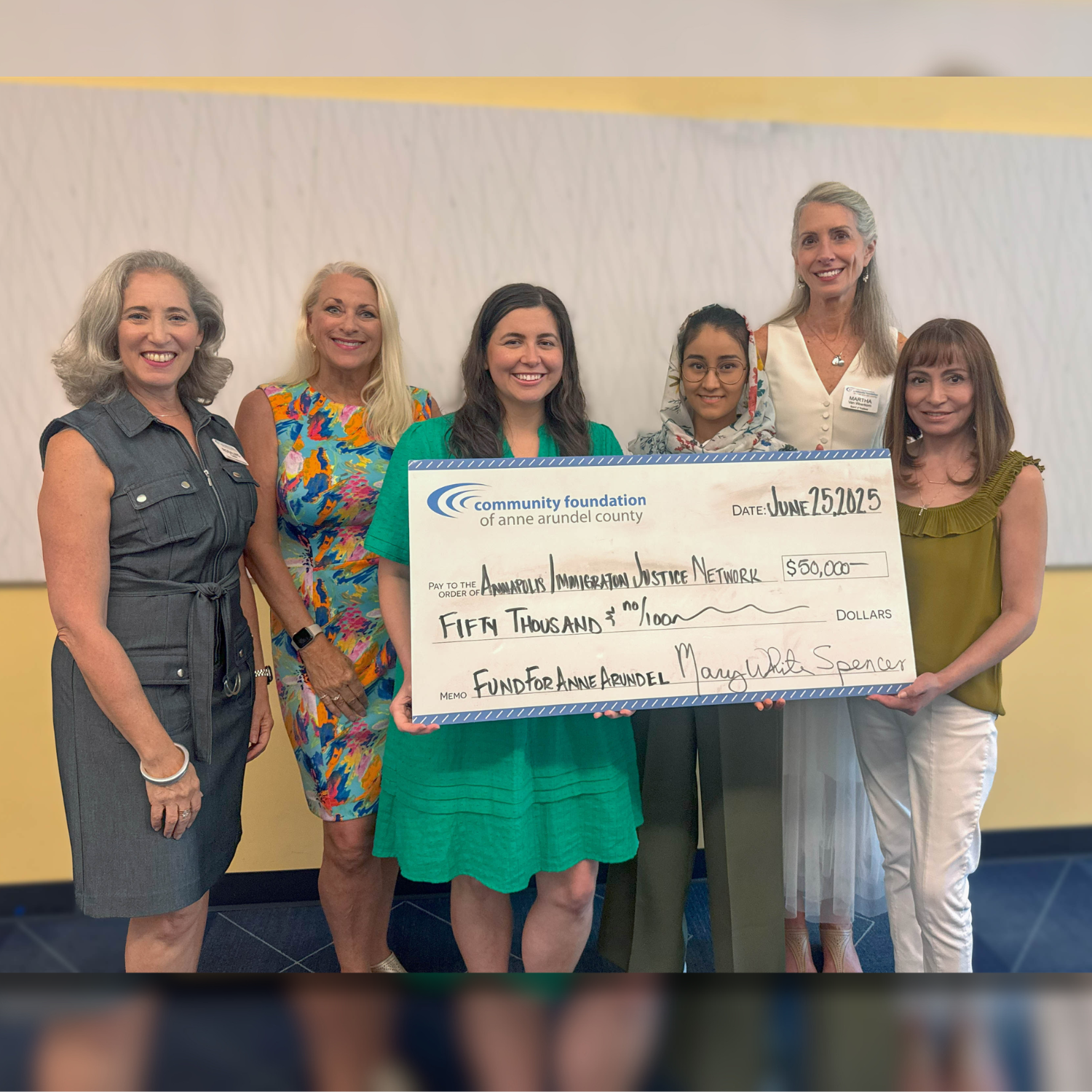
One of the Family Protection Fund’s grantees, the Annapolis Immigration Justice Network (AIJN), is connecting asylum seekers and vulnerable immigrants with quality legal counsel and direct case management support, not only securing legal status but also unlocking life-changing opportunities. Legal firms offer “low-bono” rates, and AIJN provides financial assistance towards the cost of representation through their legal fund. With the grant funds, AIJN partnered with Amica Center for Immigrant Rights (formerly CAIR Coalition) to expand legal representation for immigrants in Anne Arundel County, especially for those in detention. The grant will centralize access to legal representation and establish a referral pipeline to reduce the risk of deportation and decreasing the likelihood of family separation. AIJN will expand its program to include individuals who have been detained and increase the financial assistance amount for these complex and more costly cases.
Path to Hope, a program of Path Project, Inc., a nonprofit immigration law office in Annapolis that provides low-cost and pro-bono legal services, was awarded a grant to cover therapy sessions for at immigrant survivors, while also supporting free consultations for family members of detained immigrants. For these survivors applying for immigration benefits, the organization prepares detailed affidavits and coordinates trauma-informed psychosocial evaluations conducted by bilingual therapists. These evaluations, submitted as evidence in immigration cases, are often critical but unaffordable for low-income immigrants. This support will provide both immediate therapeutic care and essential documentation for humanitarian-based immigration applications.
Another grant recipient, The Center of Help, which has served the county’s immigrant community for more than 25 years, provides crisis support services through its Case Navigation program. This program assists immigrant families facing urgent needs such as housing instability, food insecurity, unpaid hospital bills, sudden job loss, domestic violence, and court-related matters. Bilingual Case Navigators help clients access, emergency benefits, affordable healthcare, housing and employment applications, interpretation services, income-verification letters, and other time-sensitive needs. With the grant, the organization expects to serve 400 and 500 individuals in crisis, resulting in approximately 1,300–1,500 cases administered. Due to recent funding reductions, Case Navigators currently work part-time, which limits the number of clients they can serve. Grant funds will support personnel costs, sustaining staffing levels and ensuring immigrant families in crisis continue to receive consistent, high-quality support.
The Organization of Hispanic and Latin Americans (OHLA), one of the county’s oldest Hispanic-serving and Latino-led nonprofits, serves approximately 4,000 individuals through walk-in support, case management and navigation, emergency aid, health and wellness programs, and community education. Grant funding will support OHLA’s Familias Seguras: Crisis and Stability Support for Immigrant Families in Anne Arundel County initiative. Through the initiative, OHLA will serve at least 300 immigrant families with crisis intervention, case management, emergency assistance, and mental health counseling, all provided entirely in Spanish. OHLA will also expand its existing Hablemos platform, which provides reduced-cost online mental health support, to include in-person bilingual counseling for families who prefer direct connection.
At a time when tensions and caseloads are at an all-time high, these nonprofits are providing stability, legal aid, and guidance to immigrant families across Anne Arundel County. Help support CFAAC’s Family Protection Fund to sustain this important work.